 When the United States and allied partners invaded Iraq in Gulf War II there was a massive ground invasion, with more than 175,000 U.S. and allied soldiers still taking roughly three weeks to topple the Saddam Hussein regime.
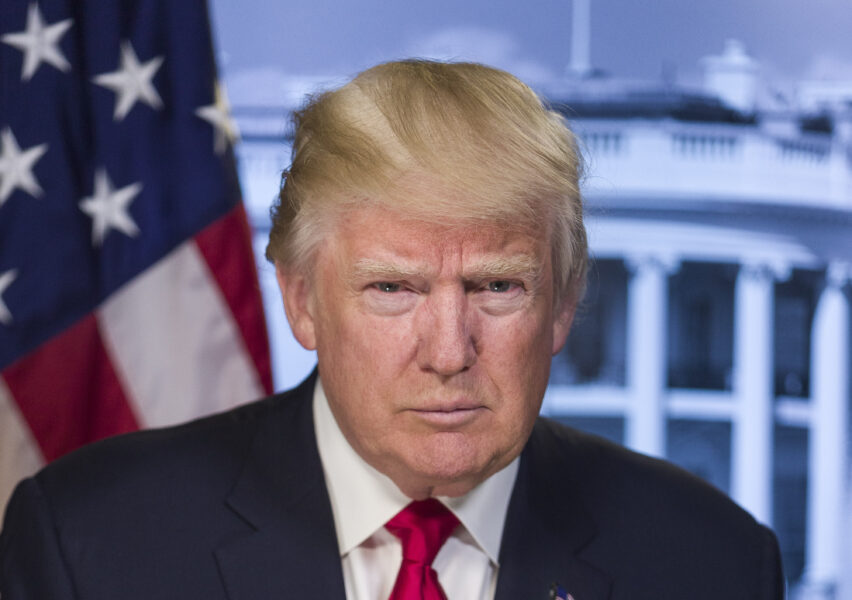
Under what is apparently a new Trump military doctrine, of limited strikes and maximum media quotes, action against Iran seems limited to a fraction of the air attacks, compared with Gulf War II, some limited naval interdictions against civilian vessels or glorified military speedboats, and no ground invasion whatsoever.
Yet the limited, partial campaign gets accompanied by heavy rhetoric that has periodically cycled through claims of dominance and quasi-victory.
Meanwhile, despite some attacks killing some Iranian leaders, the Iranian regime remains in place. President Donald Trump has done little or nothing to alleviate the suffering of the Iranian people, other than, reportedly, perhaps somewhat vain attempts to assist internet access. There is no control or governance of land, and certainly no liberation of prisoners.
In Venezuela, there was a somewhat narrowly focused land action aimed at arresting two people, resulting in the killing of some enemy security forces in the process, and related air attacks. There also were injuries to U.S. forces, some severe.
Now, in terms of international law and international affairs generally, any military strike is an act of war and cannot be minimized with regard to its nature. Yet Trump’s actions against Iran and Venezuela are quite limited in scope compared with a full-blown war, such as Gulf War II.
For that matter, in the invasion of Panama to topple, and arrest, Manuel Noriega, there apparently were roughly 25,000 ground troops in a ground invasion.
At the same time, any military combat mission, even involving just one U.S. combatant, or a small number, carries deadly risk, requires great courage and skill, and can result in injury or death. One would never minimize what, for that particular individual soldier or unit, was a mission of great serious, risk and potential consequence. Yet the point remains, Trump has tried to act like he has “gone to war” in some broad manner, when the situation is, perhaps, more like President Bill Clinton launching some missile attacks against al Qaeda in Afghanistan.
Yet when observations are made about the limited magnitude Trump’s commitment and vision for a campaign, one might imagine that a rhetorical, political response might be to falsely argue that an objective assessment was somehow denying or minimizing the sacrifices and dangers of individual combatant.
That, of course, is not the point.
A hypothetical social media “hound” with a slavish devotion to Trump, or Trumpinisms, might change the subject and say “how dare you question the commitment and sacrifice of the one soldier who got injured!” Yet that individual’s courage and skill, and their sacrifice does not change the fact that the United States did not invade, occupy, or start governing Venezuela, does not control Venezuela, and is instead working with much of the remainder of the government of the deposed leader of Venezuela.
Yet, after the limited operation to arrest two people, one might have thought, from Trump bluster, that Venezuela was now part of some kind new American Empire, with Donald Trump as Queen Victoria.
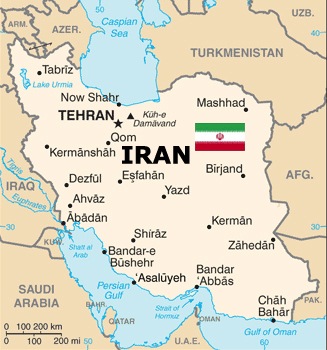
Similarly, in Iran, the Iranian regime and governing forces remain in place and its population continues being victimized.
The main demands being levied by the Trump regime, at least publicly, now seem to center around using air attacks, and murky notions of controlling the Strait of Hormuz, to pressure Iran with regard to its nuclear program and the future status of the Strait of Hormuz.
In the process, Trump unwittingly has admitted that, the last time he resorted to limited attacks and bluster, he was wrong, or misled the public, about their results. Anyone who has followed decades of an Iranian nuclear program would have thought it foolish for Trump to claim that some aerial attacks on known Iranian nuclear sites, including ones inside a mountain, would have meant the program was now gone.
Now Trump himself admits his claims were false, by making his current claims about the Iranian nuclear program and its materials being an ongoing concern.
After previously goading average Iranians to risk their lives for a new, free Iran, Trump now seems to lack the will to bring about national change in Iran.
Whatever one might think about the scope or consequences of such moves, the point remains. Trump, more a talker than a doer, has adopted a strategy of limited “war” consisting of partial air strikes and limited naval interdictions, with maximum rhetoric and “hashtag” bluster.